
Why HIMARS?

Why HIMARS?
This is a question I've been getting a lot recently. I believe I was the first to report on a lot of the HIMARS info publicly. I was certainly the first to report the increase in numbers and the sole-source. The first I had heard of it was back in October from a friend tied to the project.
It wasn't necessarily a shock. I don't think many were suspecting anything other than HIMARS to pull out on top. Yet when it comes to the concept of sole-sourcing, especially at a time when an aggressive American government pokes at our sovereignty, many seem to have taken an outright hostile stance against HIMARS as a whole.
I won't say that I'm surprised by this reaction. The amount of anti-Americanism I've seen since the inauguration of President Trump has been steadily rising to the point of getting to inquisitional levels of anger at the very idea of purchasing anything American when it comes to defence.
No matter if its the F-35, the combat system on board the River-class, to a few select radicals going against even the purchase of something like P-8. The general attitude to purchasing American equipment has turned against purchases, let alone a sole-source for what is considered a strategic weapon.
So for many, it raises the question, why are we sticking to HIMARS instead of looking at an alternative system? They do exist. There are available systems from Korea, Israel, and Brazil, and future systems from Europe are in the works.
Sadly, it isn't quite that simple and goes deeper than merely the system itself. The choice of HIMARS is not just a decision routed in commonality or availability but also in our limitations that hamper not just Long-Ramge Precision Fires, but other similar projects.
Quick Recap: What is Long-Range Precision Fires?
The Long-Range Precision Fires (LRPF) Project aims to acquire a new long-range strike capability for the Canadian Army. This capability will allow the army to reach out and precisely strike targets beyond the ranges of traditional artillery.
This is in line with the vision laid out in Our North Strong & Free, which set out 2.7 Billion over twenty years to acquire long-range missile capabilities in line with LRPF.
All three branches are currently in the process of acquiring their own Long-Range Strike capabilities, with the Navy looking at options for the Canadian Patrol Submarine to complement the Tomahawk-armed Rivers and the Air Force Looking into acquiring LRASM to provide the P8 a dedicated Anti-Ship capability.
We won't be focusing on those here, instead, we will focus on the army and their plans. The project has a budget of ~3.8 billion with plans to acquire between 20-28 launchers as well as munitions, ISS, infrastructure upgrades and training.
Of course, as many of you know there isn't planned to be a competition. The current plan is for the army to sole-source the American HIMARS system via FMS. This is being done because HIMARS is the only system that meets our requirements.
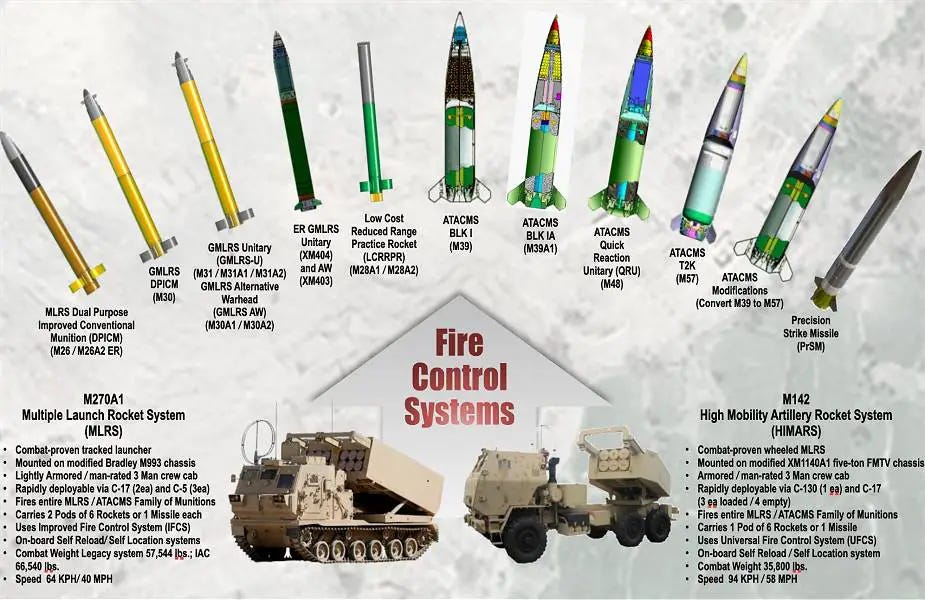
But Noah, What about other options?
This is the first question you'll often hear when discussing the Sole-Source. What about other systems? Surely some fit our needs? It's a big world out there, with lots of potential suppliers.
So what do we actually want?
To understand why HIMARS is the only fit you need to understand what exactly we want HIMARS to do, and how we can achieve that.
LRPF as we conceive it needs to be able to be rapidly deployable not just across Europe, where the system is expected to be at the forefront, but also into places such as the Arctic. The system needs to be able to be loaded into an aircraft, flown where needed, and immediately be ready to launch its payload.
That means we need a light, mobile system able to not only be moved quickly but also able to operate in the rough, less-than-stellar conditions of the Arctic Circle, where infrastructure is severely limited in places.
That means with little support, on roads that are limited to what vehicles they can properly support. You're going to see HIMARS loaded up, with its pods, sent up, fire off its payload, and then quickly pull out. All of this within less than twenty minutes.
Sounds a bit silly? I can see why, though who am I to question the planners? It's obvious that, sometimes, you have to resort to less-than-desirable methods to achieve the results you want.
Speaking of that… let's talk about the elephant in the room. Whatever system we acquire needs to be able to fit into a CC-130. That is non-negotiable. There is no scenario where we get past it at this point.
You can say we should buy bigger transports. I agree. You can talk about the CC-177. We don't have enough when you factor in the other things they will be needed for. It won't work. We don't have the sealift capability either to move things. So we are left with one option.
What does that mean in practice? We need a single-pod system. No duel-pod system will fit that requirement. That alone effectively eliminates most options that would compete against HIMARS.
Those other systems
Most rocket systems that would be available to us are based on a dual-pod system. This inherently makes them infeasible to our requirements.
That isn't to say there aren't single pod systems out there that we could hypothetically inquire about, but those systems, such as the Brazilian Astros are in a category of never happening.
I'm not trying to be dismissive, but it won't ever happen, even if it fits the requirements. We won't be purchasing an orphan system that isn't in at least some use within the NATO+5E sphere.
As of right now, there are two other primary systems discussed when talking about LRPF - EuroPULS and Chunmoo. Both of them are dual-pod systems, although both have hypothetical single-pod variants.
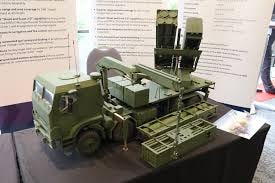
EuroPULS is an in-development, licensed version of the Israeli PULS system produced under partnership by Elbit Systems and KNDS for the European market. It is designed to be a cheaper, ITAR-free alternative to the American HIMARS.
EuroPULS is by far the most prevalent system among our NATO allies that isn't the M270/HIMARS with PULS already being in service with the Netherlands and Denmark while Germany and Spain are set to receive their systems in the coming years.
Other NATO countries like Bulgaria, Greece, and Norway have also expressed interest in the system given its cheaper price point and quicker availability compared to HIMARS.
As of right now PULS currently relies on Israeli-designed munitions, such as the Delilah Cruise Missile and Predator Hawk Tactical Ballistic Missile. This gives PULS a strike capability out to 300km.
This of course isn't the extent that EuroPULS is planning. KNDS very much wishes to adapt PULS into a true European system. That includes integrating new munitions, such as the Boeing/Saab Small Diameter Bomb and Kongsberg Naval Strike Missile.
In development munitions, such as MDBAs Joint Fire Support Missile (JFS-M) and the 3SM Tyrfing are also potential options in the future that put the range of EuroPULS out to 500km. That is a bit more in line with the range of HIMARS new PRSM missile.
EuroPULS certainly has a lot of potential as a Pan-European system. The system is hopeful to start delivering starting in 2027/2028 and I hear that a single-pod system might be in the books.
EuroPULS isn't the only system that is brought up in these discussions. We also have the Korean Chunmoo rocket system, by far everyone's favourite when compared to HIMARS.
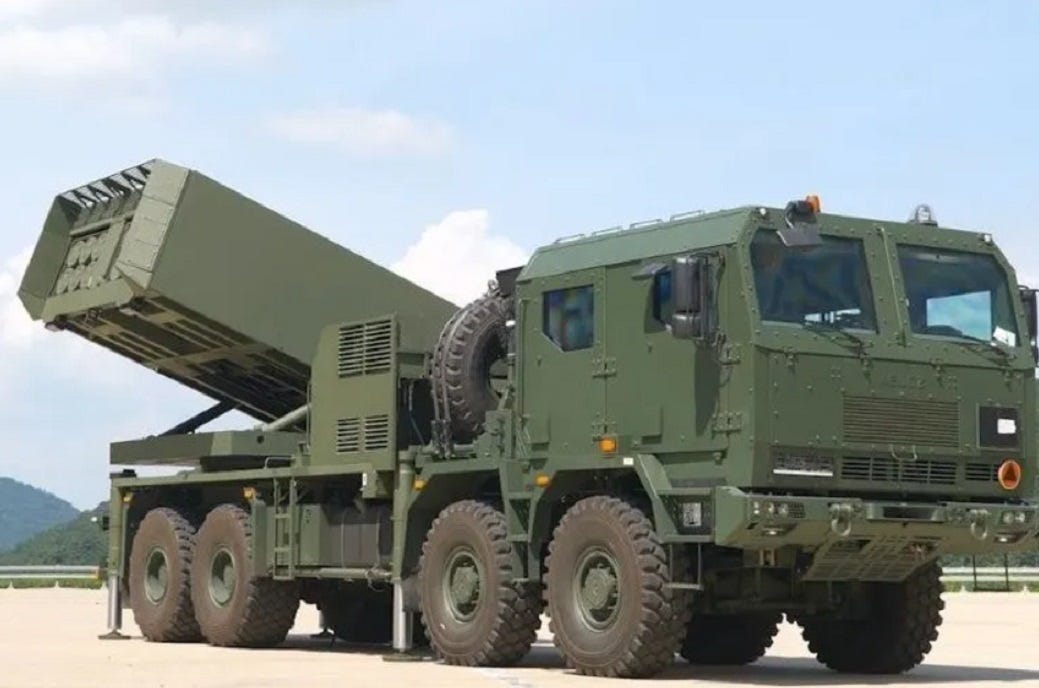
I talk about Korea a lot. I think it's safe to say I'm the Canada-Korea defence expert! If there is a Canadian who has talked more about it I would love to meet them. I understand why Chunmoo interests people.
It's not American, it's ITAR-free, and the Koreans are likely to offer us the option to manufacture the system under license. That includes the munitions as well. That point alone is enough to shift most people into its camp.
It also forms a piece of a much wider Korean package that they've been marketing to us. This would include Chunmoo along with the KSS-III, K9, and T-50. That package is quite stacked, and many see value in a larger deal that can be better used to negotiate domestic manufacturing.
I'm one of them! Ive argued for the same thing earlier this year when talking about building our domestic production capabilities. It also really does help that the system is almost entirely Korean including in its munitions.
That makes negotiating the proper licenses far easier when compared to a system that uses a mix of munitions from several countries/companies and make no mistake, that is by far the biggest advantage it has in proper competition.
Chunmoo does have a healthy set of munitions, including the KTSSM series, which includes the export-designed CTM-290 Tactical Ballistic Missile and its own specialized Anti-Ship Ballistic Missile in development, the CTM-MR.
These form the higher end of Chunmoos Long-Range Strike capabilities, though currently only out to 300km with plans to extend the ranges out to the 500km range in the future.
There are also plans, like PRSM, to add new payloads to the KTSSM-series including a new Thermobaric Warhead and integrated loitering munitions. You can honestly see a lot of similarities in the development plans for PRSM and KTSSM.
You find that a lot in Korean systems. It is very clear they use American systems as a reference and build from there. They aren't copies but they very much follow the American philosophy. You can see it in KVLS and its munitions, which is very similar to the lineup you would find with MK.41 and you can see it here.
Perhaps I'm too Koreabrained for my own good and am reaching conspiracy levels of thought. KTSSM is looking at versions that both extend the ranges and add new payloads, including both looking at integrating loitering munitions.
The one thing is that while the Koreans have decided to create a dedicated Anti-Ship missile for Chunmoo, the Americans have decided to add a maritime seeker to PRSM so it could take on the Anti-Shipping role.
As of right now, Chunmoo is in service with Korea, Poland, Saudi Arabia and the UAE. Romania is also a highly potential client as Hanwha has recently agreed to establish a manufacturing facility in the Country that will likely include Chunmoo, K9 and K2 tanks.
So it isn't quite as extensive as EuroPULS when it comes to users but does likely offer a domestic package that can mitigate, at least to some, the supply chain issues that arise from lacking a larger user-base.
Chunmoo now also has a single-pod variant and unlike EuroPULS we've seen a model of it. The High-Performance Launch Rocket System (HPRS) was previously shown off this year in Australia and shares the same system as the larger Chunmoo.
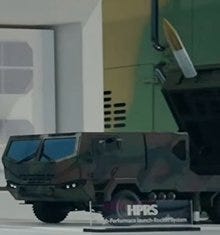
While likely developed for smaller countries like the Philippines, which reportedly was looking for a lighter, C-130 transportable system as well, the HPRS in its current form would also fit our needs as it relates to size.
Besides the smaller size there isn't anything remarkably different between it and Chunmoo which is why I tend to lump them together as one system. Hanwha also has an unmanned system as well that is a single-pod but as far as I know, it exists primarily as a concept and is not as a full-fledged product.
Both EuroPULS and Chunmoo offer credible alternatives to M270/HIMARS. They are modern, capable systems that offer a wide, comprehensive array of munitions. I think both will do well in finding buyers both in NATO and abroad.
So Noah, why don't they make sense then?
By now you're probably very confused as to what the holdup is. Surely both systems offer enough to at least warrant a competition?
It's very nice to have systems on paper that can do what we want but it's another to have them available. The fact is that, while models and promises exist, no single-pod version of PULS or Chunmoo actually exists.
Now it shouldn't be to hard to make them, we can admit that. In theory, most of the pieces are already readily there. The issue when talking about these single-pod systems is that we want something proven, something that is already established. We don't want to pay for the integration work, or risk delays because of unforeseen issues.
That is a risk for a project that wants to reach IOC in the next five years. It is one that, from talking around, the project team doesn't want to be worrying about. It's an extra hassle that isn't worth it when a perfectly good alternative is there.
On that front, there is the issue of Commonality. I did say it wasn't the only issue but it's still a factor. The M270 and HIMARS both share a common pod system. They are interchangeable in the munitions they use.
Fourteen NATO states use one or both of these systems. They're also in service in Japan, Australia, Korea, Taiwan and across the Middle East. In the event of conflict there is already a well-defined supply chain and talent pool for HIMARS that we can, and in all cases would leverage.
That also means that there is a commonality with most of our European partners, including all three of the Baltics, Finland, Poland, Italy, the United Kingdom, Germany and the list goes on and on.
While I know many moan about commonality and integration it is a major factor in almost any decision we make. We are not big enough, nor put the kind of money in to support our own, separate supply chain.
Yes, we could likely score manufacturing for something like Chunmoo, but that raises the concern of us, for example, not producing enough to be sustained during a real conflict, with almost no backup supply chain to speak of. Would we purchase enough? Would we be able to sustain our demand?
These are important factors to consider with any system that we purchase. It's useless if we don't have the munitions to expend. Let's talk about that too. The munitions offered, while nice, are still a distant second to what PRSM provides.
Yes, something like Predator Hawk or future KTSSM offer ranges out to several hundred kilometers. That is fine for countries like Europe, or South Korea where those ranges are sufficient.
Part of this issue I find is that people inherently view HIMARS as a purely expeditionary capability, ignoring that the Army also sees them in a Continental Defence role, a deterrent as we spoke about earlier.
PRSM can reach out beyond 500 kilometers, beyond the ranges that something like CTM-290 could at ~300. That isn't a non-significant difference. Now, CTM-290 is quite a different missile from PRSM in its defense, being much more comparable to ATACMS.
While info is a bit difficult to find, the CTM-290 can accommodate a warhead up to 500kg, compared to ~90kg for PRSM and ATACMS with ~225kg (using the M57). What I'm trying to say is that CTM-290 is a heavy girl. That limits her range significantly.
This isn't much of an issue for the Koreans who don't need that additional range and have to be content with targeting heavily fortified and buried targets strung along the Baekdu-Daegan mountains.
For us, however, that extra weight isn't seen as a need compared to range. The farther out we can target the better. That is the philosophy we have. We have no use for a massive, mountain-busting missile that shortens the distances at which we can target our adversaries.
We will have a limited number of systems, less than thirty. That makes them a highly valuable asset. Range provides an extra layer of protection, being able to stay farther back and out of the range of similar Russian or Chinese systems.
This also isn't talking about future PRSM increments. For those who don't know, PRSM will have several incremental upgrades over the next decade. The two that matter to us are Increment II and Increment IV, which funny enough comes before III in the timeline.
Increment II gives PRSM a seeker capable of targeting Maritime targets while Increment IV aims to extend the ranges of PRSM past 1000km. As I said before the Koreans have decided to create a dedicated Anti-Ship missile while PRSM will be upgraded to fill that role.
Recent funding has also opened up the possibility of GMLRS and ATACMS to be given a maritime seeker, as well as potentially integrating new munitions such as the Long-Range Anti-Ship Missile (LRASM) onto HIMARS. So there is lots of room there for those primarily considering the Anti-Ship role.
And that is certainly a role we want for HIMARS. It isn't a case of it's nice to have. It will be a role LRPF is expected to carry out and one that PRSM, despite its smaller warhead, stomps the competition with on range alone.
HIMARS with an Increment IV PRSM placed in the right location can effectively cover the Labrador Sea, or most of the Arctic Archipelago from Cambridge Bay. Those are two legitimate concepts I've seen discussed with selecting HIMARS.
That is a detterence that something like CTM-MR, with a range under 200km can't provide, even if a HPRS can carry four at a time. The same goes for EuroPULS equipped with NSM, which is still only a concept as of now.
Now, if you know me you will know that I'm not sold on the idea of HIMARS in the Arctic ever truly coming into play and I question how heavy it weighs in planners' minds. I can't deny though that it's what they want and as someone who spends many days discussing projects I can't just ignore that. We have to base ourselves on the requirements that we are presented as a public.
To put it all together HIMARS offers:
A system that meets our requirements for CC130 transportability
A system that is used by most of our International partners
A system that provides the exact munitions and capabilities we want, and is frankly more capable than the alternatives
A system that actually exists and isn't just on paper, or existing as a plastic model
You could easily buy something like HPRS and it will fit the basic requirements we have laid out. What it won't do is do it as well as HIMARS, a system that already exists, is available and fits us better in terms of capabilities.
Any competition will likely lead back to the same result. I know that might be disappointing to some people but it's the truth. Why put in the effort to make a system work for us, to take a hit in capability when a perfect solution is sitting right there?
Now, I know some will bring up the American factor. We can't ignore that in this discussion. That is the chief concern of everyone and I understand that! I've said I had concerns about such a strategic asset being tied to an unstable administration.
We need to diversify. There is zero question about it. We need to broaden our supplier pool and take advantage of partners who are willing to work collaboratively with us. There is plenty of room to do that.
It should not come though at the expense of capability. We should not allow its power to force us into a box where we feel the need to accept less just to be American-free. This is one such case where the other systems available just don't match up well to us.
You can talk about working on new munitions or expanding our airlift capabilities. Neither are actual solutions with realistic, attainable goals. They are fantasies used to justify the choice of lesser with the promise that surely something will come to tip the scales.
We can't accurately rely on that when making such an important decision. Sometimes we have to accept that the American option is what fits and is what is needed and work to mitigate the volatile nature of the current administration.
On that topic I don't think it would be an issue anyway. There is always a risk of the Americans shutting off support, or cutting the munitions supply, another good reason to have allies available in mass who can mitigate some of those issues.
The chance of this happening though is extremely low and unlike fighter jets, we could pivot fairly quickly if needed. I don't see this administration getting to that point with us where they are tampering with our capabilities. If it were to ever get to that point there would be far bigger concerns, and a devastating blowback to the American arms industry to handle that would be of far greater concern than HIMARS itself.
We need to acknowledge the Ukrainian spat but also recognize that we are different even if it doesn't feel like it. We need to listen to the people at the forefront who have made it clear the relationship remains stable and is working as intended.
We can call them fools, idealistic, ignorant of the potential risks. It still doesn't change the situation on the ground and I am firmly in the camp that the risk isn't big enough at this time to justify throwing this away.
That might disappoint some, I understand that. The reality is though that we can't allow ourselves to become inquisitional to the point of paranoia and radical solutions. We can't ignore the reality on the ground from the people who make clear that the relationship is stable and that nothing else truly fits our needs. We've put it to paper here!
Sacrificing capability is never a good thing, nor is being overly reliant on the unreliable. It's a balancing act that we still don't know how to manage. It's a new reality we are still trying to learn how to navigate.
We won't figure it out in a day. We likely won't ever figure it out given the Kakistocracy we've been saddled with dealing with. What we can't do is make rash, zealous decisions. We have to reform our security relationship with the United States without tearing it apart.
This is one of those fights that just isn't worth having. The risk here is minimal to my mind, and the capabilities and advantages HIMARS provides far outweigh them. That isn't to say we shouldn't fight for more out of the deal, such as domestic manufacturing but we should also be accepting that a sole-source is the right call of action here.
It provides us with a much-needed capability far faster and at a time before procurement costs are likely to rise in the following years. I can't find a significant reason to argue against it that isn't emotionally or patriotically driven.
Sometimes the best choice is the one that you don't want to make and we have to accept that we are going to be in this situation again and again. I only wish that it didn't have to be like this in the first place.
Technically, it wouldn't be a sole source deal, but a government to government procurement, using the US FMS system...
Anyways... I agree the GMLRS ER & PRSM missiles probabpy offer the best capability set for the Army. I have no issue procuring this particular capability from the US, in my mind, we need to push for 2 caveats:
1. The whole kill chain must be able to be managed internally by the CA. If we give this to an arty regiment supporting a canadian Brigade.. Or Arctic sovereignty/area denial, we want to be able to fire off missiles without going back to a US LO or HQ somewhere. Doing so would slow down the kill chain... Or comes at the (slight) risk that the US says no, they don't want us to prosecute a certain target. Either one could put Canadian soldiers etc at risk.
2. For the love of god, we need to get this integrated onto something like the 4x4 Zetros. Sure, FMTV is supportable through the US /COLOG... But on our side that is an entirely new (& expensive) supply chain to support what is supposed to be the cheap & easy part of the system. In terms of technical risk.... The risk of integrating this sort of pod system onto a truck is pretty low in terms of weapon systems... & if schedule is a concern, I'm sure LM would be happy to expedite if we threw a few tens of millions at them to do it quickly.
Other than that... I still question the CC130 requirement. Are we really going to send a single HIMARS all on its lonesome to an isolated place? How is it going to get targetting information. Do its on-board radios (or SATCOM) function over 100s of kms of distance? Where is the battery command post (& what is that mounted in?) Is there any infantry or any other sort of security deploying with the very small HIMARS crew? If any of these questions result in deploying more stuff to accompany a HIMARS truck.... Then it'll either take a CC-177 or multiple CC130s to carry everything. At which point I'd question the CC-130 transportability requirement.
Thanks for the update Noah! Yeah, I share your enthusiasm for Korea-Canada JV's! Also, JV's with other aligned countries and ITAR free firms.
In thinking about the issue of to buy or not buy American, I am wondering about short-term vs. long term? Do we think the US relationship will be permanently changed and also unreliable just for the short term i.e. next 4 years or for the long term i.e. 30-50 years? I think that tips the scales in decision making for how we select and invest. Related to that, do we think the geopolitical situation and threat level to Canada and it's interests will be elevated (and possibly rising) for the short term or long term (and public political support for defense)? That also tips the scales in decision making for HIMARS and other platform decisions.
IMO, our security = our collective will + our economy + our defense industrial complex + the CAF (people, kit, logistics, readiness) + our partners